
Our story
re:Serve began in early October after co-founders Eason and Edwin noticed the growing problem between food waste and food insecurity in their communities. While families continued to face limited access to nutritious meals, large amounts of surplus food were frequently discarded. They recognized that this challenge was not limited to a single local area, rather it reflected a broader issue affecting communities beyond their immediate surroundings. They sought to fill the gaps in coordination, logistics, and volunteer capacity in order to support food distribution efforts across communities in New York.
Looking ahead, re:Serve aims to expand its reach by strengthening partnerships and, over time, exploring opportunities to establish chapters in additional regions. Through increased outreach and social media, re:Serve also seeks to raise awareness around food waste and food insecurity while recruiting more volunteers to support communities in need.
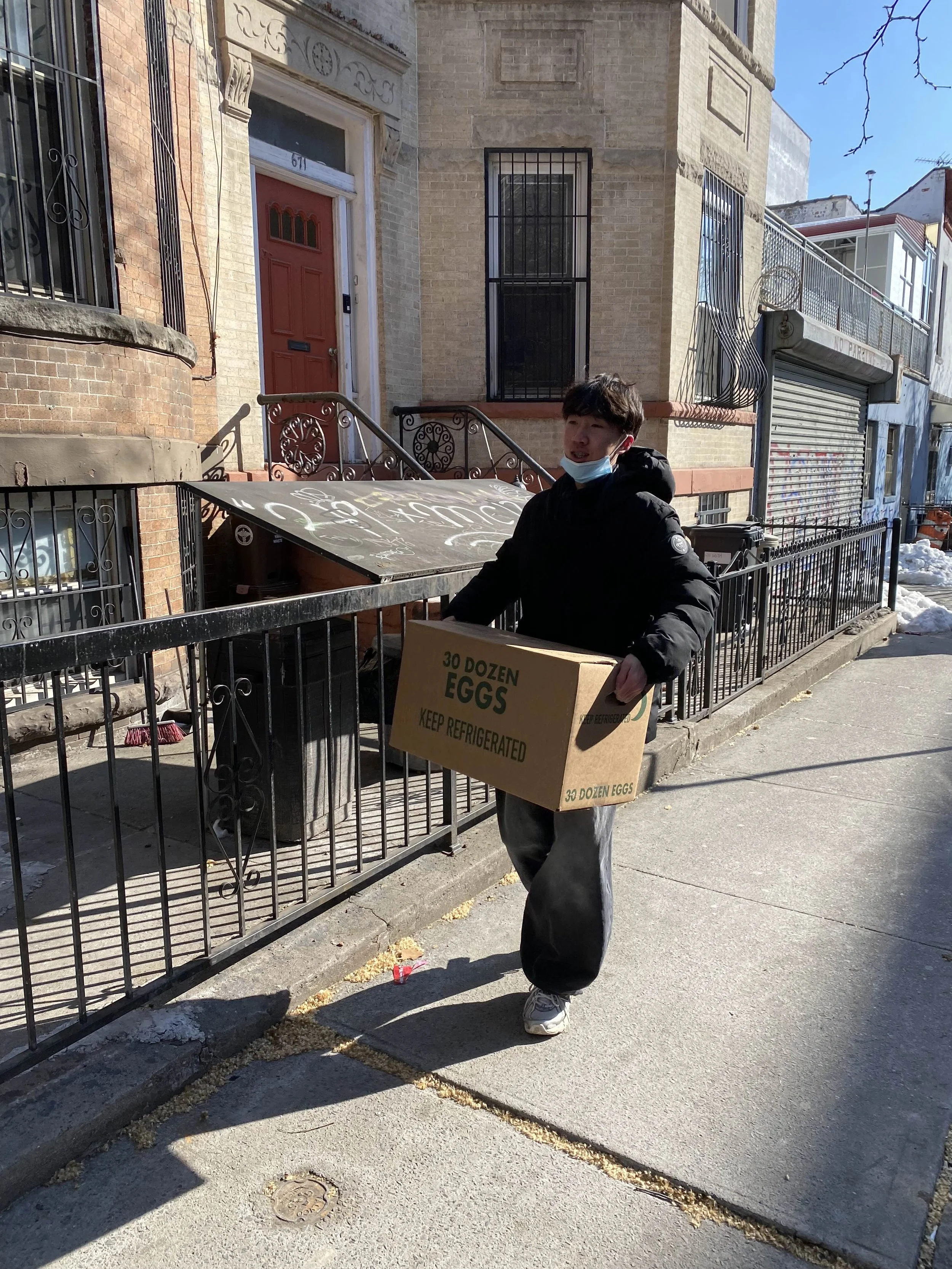
Edwin’s Story
For Edwin, this realization was shaped by his experience volunteering with Tzu Chi, where he was a frequent volunteer in organized food distributions. Through this work, he took on leadership responsibilities within distribution operations, including managing registration, coordinating volunteers, and delegating roles for distributing fresh produce and non-perishable items. The clear organized structure and consistent volunteer engagement allowed distributions to efficiently serve over 300 families.
At the same time, he recognized how Tzu Chi intentionally minimized food waste by repurposing surplus food: providing meals for volunteers and safely storing excess items for future distributions. He recognized the need to carry these lessons beyond individual events and into additional communities, ensuring that surplus food was consistently used to support those in need.
Eason’s Story
For Eason, the issue of food insecurity is informed by long-term exposure rather than a single defining moment. He grew up in Queens, where his father operates a food business that serves many local families. Over the past year, Eason has worked regularly at the store due to his father’s back problems, which has given him firsthand experience into how families navigate food access on limited budgets. He frequently observed parents making careful tradeoffs between cost and nutrition, particularly when shopping for their children.
This motivated Eason to create re:Serve. He didn’t want a short-term service effort, but an actual structured initiative focused on improving food recovery and distribution systems within underserved communities. As the initiative took shape, he invited Edwin to join as a co-founder to help build and run the program.
“i think its great that re:serve provides an opportunity to highschoolers to actually make a change in tHe community.”
— Eugene Kim, Head of Volunteers